Rocket Failures
Ariane 5 Flight 501
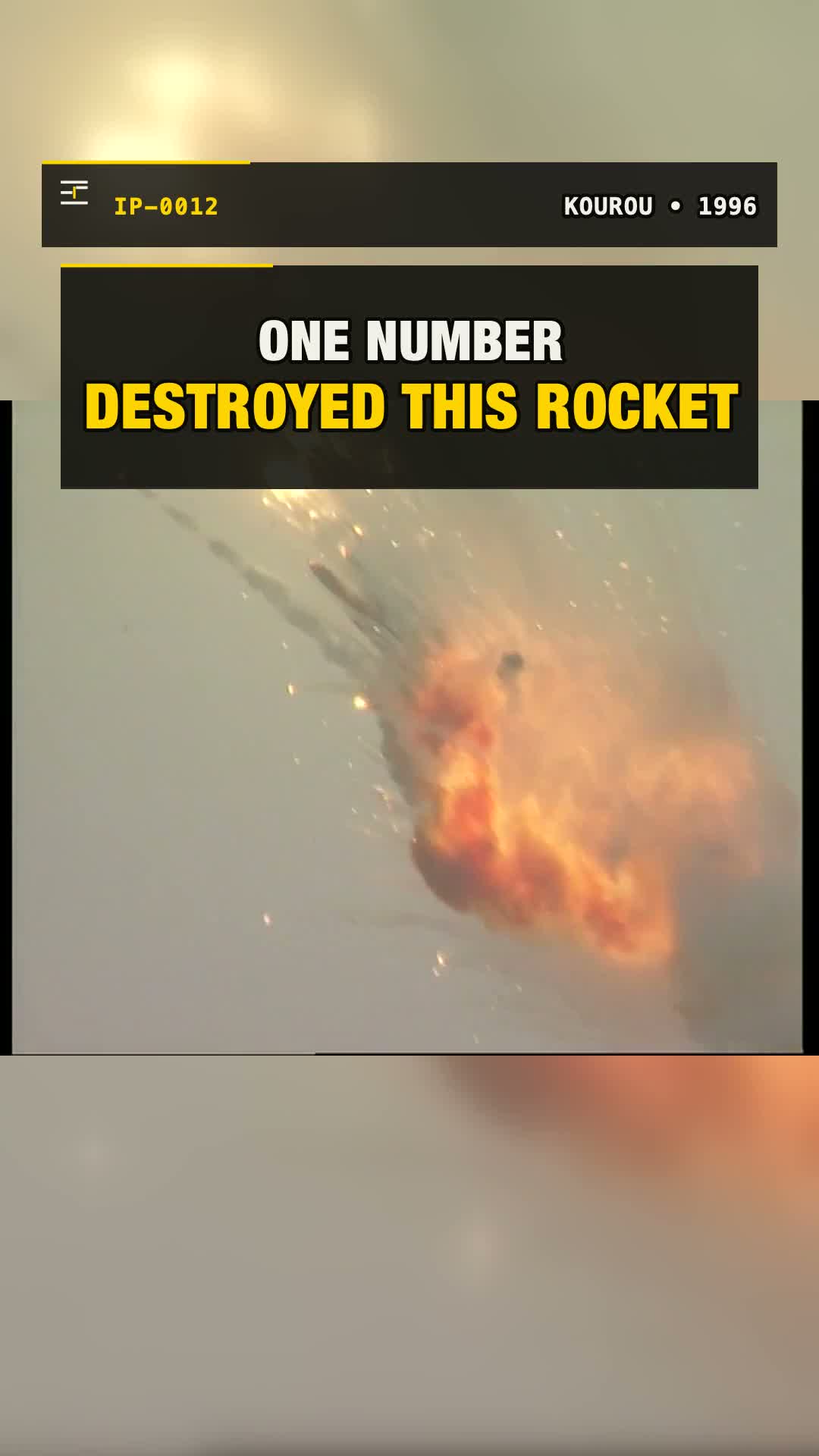
Europe’s new heavy-lift rocket was destroyed on its first flight after reused software encountered a value outside its original design envelope.
The knowledge that remained
Knowledge that outlived the failure.
- 01
Reused software must be revalidated against the new system’s complete operating envelope.
- 02
Two identical computers are not independent protection against a common software fault.
- 03
Representative end-to-end testing must include the real interfaces that can fail together.
Flight 501 became a defining case in software safety, common-mode redundancy, requirements validation, and the risks of reuse without full system-level testing.
Timeline
The sequence of failure.
- 01ConditionsJUN 04, 1996
Ariane 5 launches
Europe’s new heavy-lift launcher begins its maiden flight from Kourou.
- 02DecisionT+36 SECONDS
Both inertial systems stop
A sideways-velocity value overflows an unprotected 16-bit conversion in both computers.
- 03DecisionSECONDS LATER
Diagnostic data becomes guidance
The flight computer interprets the error pattern as valid attitude information and commands extreme nozzle movement.
- 04FailureT+39 SECONDS
The launcher is destroyed
Ariane veers, breaks apart under aerodynamic loads, and is destroyed by its safety system.
The event.
Ariane 5 Flight 501 was the first flight of Europe’s new heavy-lift launcher. Its inertial reference software included an alignment function inherited from Ariane 4 even though that function was no longer needed after liftoff.
The maiden flight and its payloads were lost less than a minute after launch, turning a software exception into a complete launch-system failure.
The mechanism.
An unprotected 64-bit-to-16-bit conversion stopped both inertial reference systems and allowed diagnostic data to be interpreted as flight data.
Ariane 5’s horizontal velocity exceeded the Ariane 4 range. Converting that value from 64-bit floating point to a 16-bit signed integer caused both identical inertial systems to stop.
Sources & references
Trace the evidence.
Media rights record: The episode uses official ESA/CNES/Arianespace launch footage with institutional attribution; supporting public-domain and CC BY-SA assets are recorded in the production rights register.
Discovery edition
The case in under one minute.
The Short introduces the event. This archive record preserves the mechanism, evidence, and engineering lesson beyond the video.
Short ready for releaseEditorial derivatives
Editions from this case.
A portable, source-backed edition of the complete case.
The failure sequence formatted for print and classroom display.
Mechanism, consequence, and lesson in one visual system.
Discussion prompts, activities, and a structured answer guide.
The question to remember
Was Ariane 5 lost because of one bad number?
The overflow triggered the event, but the loss required a larger system failure: unnecessary reused code, identical redundancy, missing protection, and incomplete end-to-end testing.