Space Mission Failures
Hubble Mirror
The most advanced telescope ever placed in orbit arrived with a precisely manufactured mirror built to the wrong shape.
The knowledge that remained
Knowledge that outlived the failure.
- 01
Measurement equipment must be independently validated before its result becomes the manufacturing truth.
- 02
Conflicting test evidence should trigger investigation, not be dismissed because one instrument is trusted more.
- 03
Designing for servicing can turn a public technical failure into a recoverable mission.
The 1993 repair restored image quality and public confidence. Hubble became both a scientific icon and a case study in metrology, verification, transparency, and recoverable design.
Timeline
The sequence of failure.
- 01ConditionsAPR 24, 1990
Hubble launches
The observatory reaches orbit after years of development and extraordinary public expectation.
- 02WarningFIRST LIGHT
The images are blurred
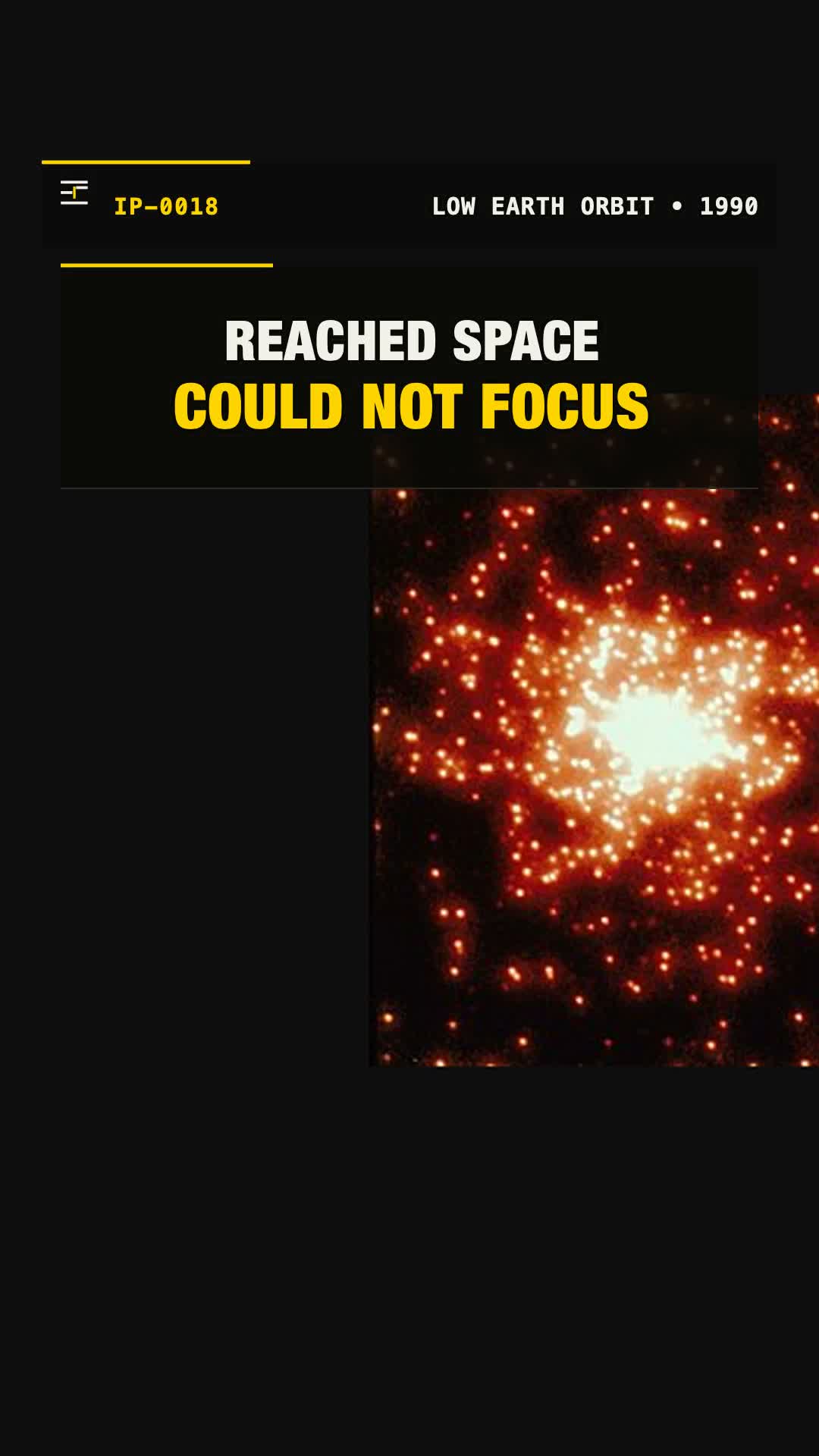
Stars appear with fuzzy halos instead of the sharp point sources the telescope was designed to produce.
- 03InvestigationINVESTIGATION
The mirror error is traced
A misconfigured test instrument had guided the mirror to an extremely precise but incorrect shape.
- 04DecisionDEC 1993
Astronauts install corrective optics
WFPC2 and COSTAR compensate for the mirror error and restore Hubble’s intended image quality.
The event.
Hubble launched in April 1990 with the promise of delivering the sharpest view of the universe. Its first images instead showed blurred stars surrounded by fuzzy halos.
The defect embarrassed NASA, delayed the observatory’s full scientific potential, and required a high-stakes crewed servicing mission to correct the optics.
The mechanism.
A flaw in the mirror test equipment caused Hubble’s primary mirror edge to be ground too flat by a fraction of the width of a human hair.
NASA traced the problem to test equipment used during mirror manufacture. The edge of the primary mirror had been ground too flat by a minute but optically devastating amount.
Sources & references
Trace the evidence.
Media rights record: Hubble, COSTAR, and servicing imagery is NASA public-domain media; before-and-after imagery includes NASA GSFC and WFPC2 team credits recorded in the production rights register.
Discovery edition
The case in under one minute.
The Short introduces the event. This archive record preserves the mechanism, evidence, and engineering lesson beyond the video.
Short ready for releaseEditorial derivatives
Editions from this case.
A portable, source-backed edition of the complete case.
The failure sequence formatted for print and classroom display.
Mechanism, consequence, and lesson in one visual system.
Discussion prompts, activities, and a structured answer guide.
The question to remember
How can a mirror be perfectly polished and still be wrong?
The manufacturing followed a faulty measurement with extraordinary precision. Hubble shows that accuracy to the wrong reference is not correctness—and that independent verification matters most when confidence is highest.