Scientific Infrastructure
Arecibo
The scientific landmark that became too dangerous to repair before it could be dismantled.
The knowledge that remained
Knowledge that outlived the failure.
- 01
Aging infrastructure can cross a threshold where repair itself becomes too dangerous.
- 02
Inspection findings must be connected to clear intervention limits.
- 03
Scientific value does not reduce the physical risks of a deteriorating structure.
Arecibo’s final moments became a vivid reminder that aging scientific infrastructure can reach a point where even saving it is too dangerous.
Timeline
The sequence of failure.
- 01Failure2020
Support cables fail
The suspended instrument platform loses critical structural support.
- 02DecisionASSESSMENT
Repair is judged unsafe
Engineers determine that working on the structure is too dangerous.
- 03DecisionNEXT STEP
Dismantling is planned
A controlled process is prepared to retire the telescope.
- 04FailureBEFORE DISMANTLING
The platform collapses
More cables snap and the suspended structure crashes into the dish.
The event.
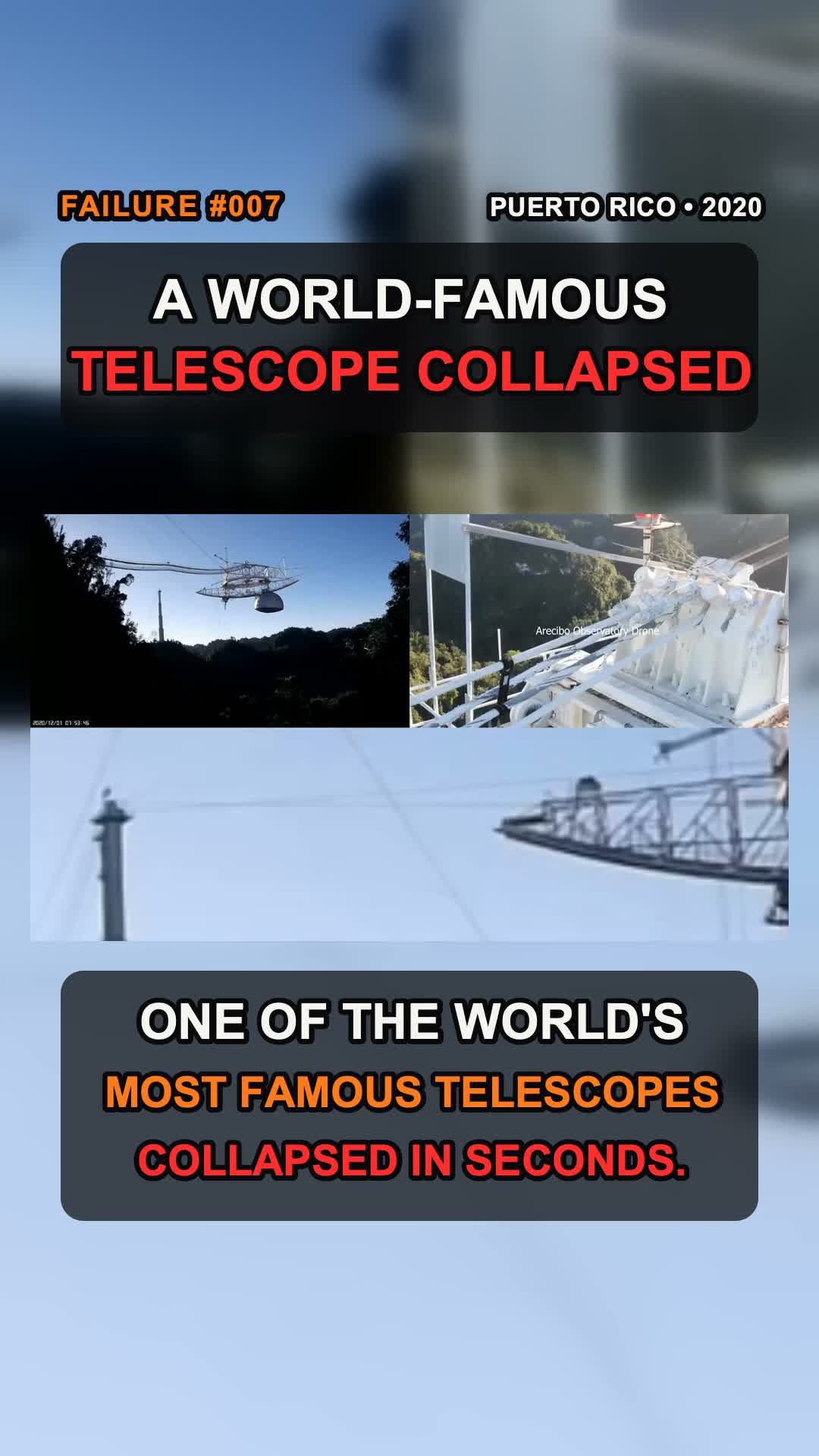
Arecibo Observatory’s 305-meter dish operated in Puerto Rico for nearly six decades. Its suspended instrument platform depended on a system of support cables.
The collapse destroyed one of the world’s most recognizable scientific instruments and ended nearly sixty years of operation.
The mechanism.
Progressive support-cable failures made repair unsafe before the final collapse.
In 2020, cables began failing. Engineers judged the structure too dangerous to repair and planned a controlled dismantling, but more cables snapped first.
Sources & references
Trace the evidence.
Media rights record: Collapse and drone footage used by the episode is public-domain NSF media.
Discovery edition
The case in under one minute.
The Short introduces the event. This archive record preserves the mechanism, evidence, and engineering lesson beyond the video.
Short ready for releaseEditorial derivatives
Editions from this case.
A portable, source-backed edition of the complete case.
The failure sequence formatted for print and classroom display.
Mechanism, consequence, and lesson in one visual system.
Discussion prompts, activities, and a structured answer guide.
The question to remember
Why didn’t engineers simply repair Arecibo?
Because the remaining structure was already too unstable. The risk to repair crews exceeded what could be responsibly accepted.