Aircraft Safety Tests
Lift+Cruise eVTOL Crash Test
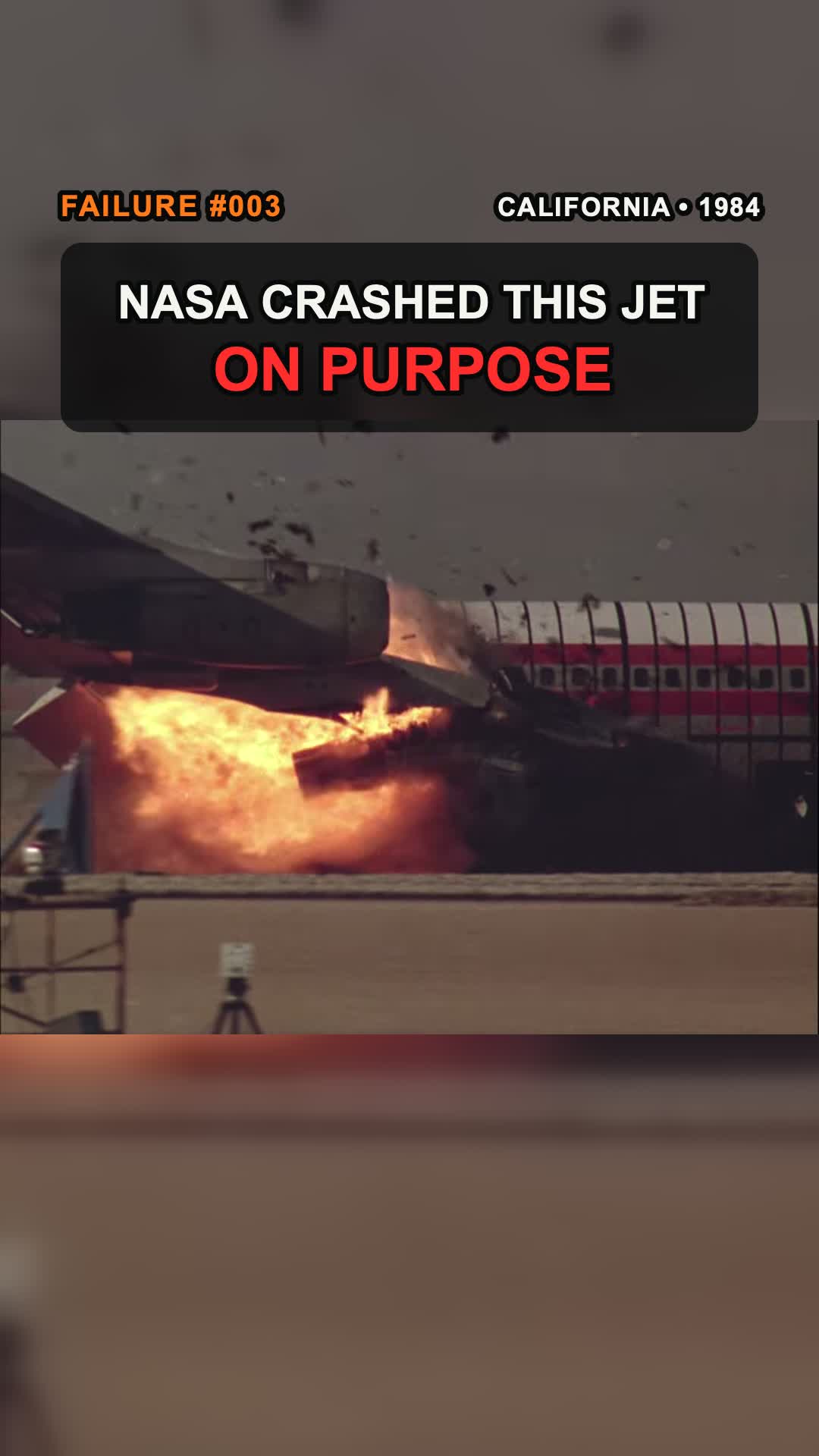
A full-scale cabin was deliberately dropped onto concrete so engineers could measure how structure and restraints manage impact energy.

The knowledge that remained
Knowledge preserved by the event.
- 01
A rigid cabin is not automatically a safer cabin; controlled deformation can absorb energy.
- 02
Instrumented dummies provide occupant-load evidence without placing passengers at risk.
- 03
A full-scale drop preserves interactions between structure, seats, restraints, and occupants.
Full-scale crash tests help turn emerging aircraft concepts into measurable crashworthiness requirements before passenger service.
Timeline
The engineering sequence.
- 01Conditions2022
NASA prepares a full-scale test article
A Lift+Cruise eVTOL concept article is instrumented at Langley's Landing and Impact Research Facility.
- 02ActionCONTROLLED DROP
The cabin falls onto concrete
NASA deliberately releases the article with instrumented crash-test dummies aboard—not passengers.
- 03MechanismIMPACT
The lower structure collapses
The body deforms instead of remaining rigid as the impact load moves through the vehicle.
- 04ResultMEASUREMENT
Damage becomes safety evidence
The controlled test records how structure and restraints manage energy before it reaches occupants.
The event.
NASA Langley conducted a full-scale crash test of a Lift+Cruise eVTOL concept article at the Landing and Impact Research Facility in Hampton, Virginia.
The event is an intentional research test. The visible occupants are instrumented crash-test dummies, not passengers, and the damage is evidence rather than an accident outcome.
The mechanism.
Deforming lower structure and restraints managed impact energy before it could reach the occupants.
The controlled drop used instrumented crash-test dummies. On impact, lower structure collapsed and the body deformed, producing evidence about structural energy management and occupant loads.
Sources & references
Trace the evidence.
Media rights record: Official NASA Langley asset. Required credit: NASA Langley / Gary Banziger. Source audio is excluded; no separately credited third-party visual is used.
Discovery edition
The case in under one minute.
The Short introduces the event. This archive record preserves the mechanism, evidence, and engineering lesson beyond the video.
Final editorial reviewEditorial derivatives
Editions from this case.
A portable, source-backed edition of the complete case.
The failure sequence formatted for print and classroom display.
Mechanism, consequence, and lesson in one visual system.
Discussion prompts, activities, and a structured answer guide.
The question to remember
Why was visible damage part of a successful crash test?
Because crashworthiness depends on managing energy. Deforming structure and restraints spend impact energy before the loads reach the people a future cabin is designed to protect.